If you were a Protestant intellectual in 1690s France, you had basically three career options: (1) convert to Catholicism, (2) flee to Holland, or (3) get thrown in prison. Pierre Bayle went with option two, which turned out great for the history of Western thought because what he did next was absolutely bonkers. He wrote a dictionary.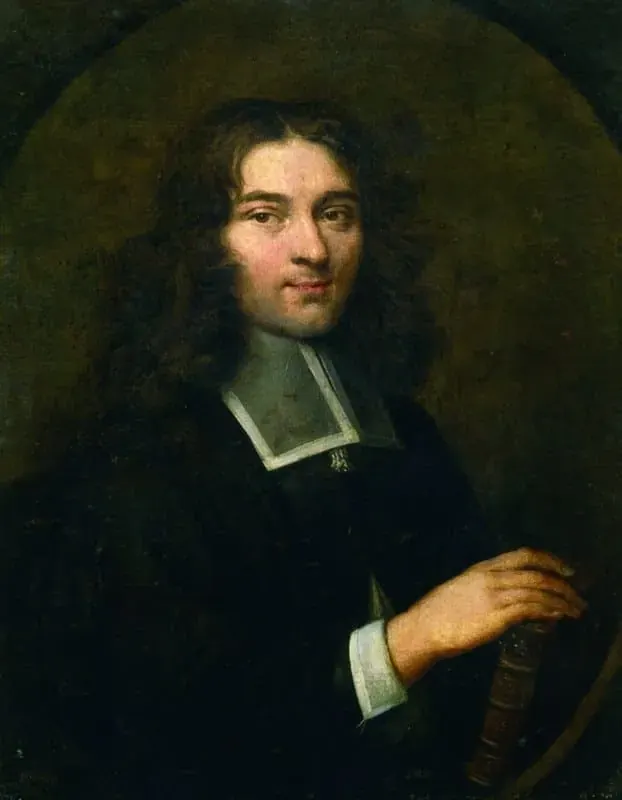 Pierre Bayle
Not just any dictionary! A dictionary that was supposedly about historical figures but was actually 90% footnotes arguing with everyone about everything. The text-to-footnote ratio was roughly 1:9, which, if you tried that today in a newspaper column, would get you a very concerned email from your editor.
The Trade
Here’s the basic setup. Louis XIV had just revoked the Edict of Nantes in 1685, which was basically France saying “actually we’ve changed our minds about religious tolerance, Protestant rights are canceled, please leave immediately or convert, thanks.” Bayle, being a Huguenot (French Protestant), relocated to Rotterdam where he was teaching philosophy and presumably thinking: “You know what would really show them? A comprehensive reference work.”
Reading Bayle’s Dictionary was the 18th-century equivalent of playing an open-world video game where you ignore the main quest. The biographical entry is the boring tutorial: “Go fetch three facts about Epicurus.” But then you click on footnote and suddenly you’re on a 10,000-word side-quest about whether a god who allows evil can be considered good, unlocking the secret ‘Radical Doubt’ achievement. You’d go in looking for a date and come out three days later questioning the fabric of reality.
But here’s the genius move: Bayle didn’t write an angry pamphlet about religious persecution, which would have been the obvious play. No, he wrote a dictionary. A boring, respectable dictionary of biographical entries. “Oh, you want to know about Achilles? Let me tell you about Achilles. Also in this footnote let me explain why everything you believe about certainty, religious authority, and the nature of truth is probably wrong.”
The whole thing was structured like regulatory arbitrage for ideas. The main text would be some innocuous biography, “King David was a biblical figure” and then there’d be a footnote longer than this entire newsletter explaining why actually the story of David was morally complex and by the way have you considered that atheists might be capable of virtue? Footnote D would argue with Footnote C, Footnote F would provide citations that undermined the whole entry, and before you knew it you were deep in radical skepticism territory.
The Information Asymmetry
The really beautiful thing about Bayle’s Dictionary is that it looked boring. Dictionaries are supposed to be boring! They’re reference works! Who’s going to censor a dictionary?
“What are you working on, Pierre?” “Oh, just a historical dictionary. Very scholarly. Lots of citations.” “Sounds tedious.” “Extremely.”
Meanwhile, he’s in there undermining the entire basis of religious certainty, suggesting that comets don’t cause disasters (controversial!), and arguing that a society of atheists could theoretically function just fine (extremely controversial!). The man was essentially running a philosophical Trojan horse operation, except the horse was a multi-volume reference work with endless recursive footnotes.
The Catholic Church eventually figured this out, of course, and put it on the Index of Prohibited Books, but by then it was too late. Everyone who mattered had already read it. Voltaire had a copy. So did basically every Enlightenment philosopher. Thomas Jefferson owned the 1734 English translation. The thing became the Wikipedia of skeptical philosophy for the 18th century, except with more jokes about obscure theological disputes.
The Market Dynamics
Think about the market for ideas in the 1690s. You’ve got:
- Official Catholic doctrine (monopoly position, enforcement mechanism involves actual enforcement)
- Protestant theology (competing product, market share varies by geography)
- Underground radical philosophy (high risk, high reward, distribution challenges)
Bayle found a fourth category: reference works that accidentally-on-purpose contained radical philosophy. It’s like if someone today published a cookbook where every recipe contained a subversive political argument in the ingredients list. “To make a proper soufflé, you’ll need six eggs, two cups of flour, and by the way have you considered that religious revelation might not be a reliable source of knowledge?”
The Dictionary was commercially successful too! It went through multiple editions, each one bigger than the last because Bayle kept adding more footnotes to argue with critics of his previous footnotes. The second edition (1702) was 40% larger than the first. It’s like responding to your reply-guys by publishing an expanded book where you reply-guy yourself harder.
The Intellectual Arbitrage
Here’s what made Bayle’s project so effective: he wasn’t actually trying to win arguments. He was trying to show that most arguments couldn’t be definitively won. Every entry was an exercise in “well actually it’s complicated.”
Take his entry on Pyrrhonian skepticism. A normal dictionary would say “philosophical school that advocated suspension of judgment.” Bayle’s entry was basically: “Here’s why these guys who thought we couldn’t know anything for certain might have had a point, here are seventeen arguments for and against their position, here’s why the arguments against them also prove their point, and by the way isn’t it interesting that being uncertain about everything doesn’t prevent you from living a normal life?”
This was genuinely subversive stuff! The whole political and social order of 17th-century Europe was built on the idea that religious and political authorities had access to certain truth. And here’s Bayle in his dictionary, his DICTIONARY!, suggesting that actually certainty is overrated and maybe we should all calm down about having the right answers.
The Exit Strategy
The beautiful thing is that Bayle’s approach created its own defensive moat. When critics attacked him, he could always say he was just being thorough. “I’m simply presenting all sides of the historical record! Would you prefer an incomplete dictionary?” It’s the scholarly equivalent of “I’m just asking questions.”
Plus, the format made it nearly impossible to refute. How do you argue with a dictionary that argues with itself? Every criticism you might make was probably already in a footnote somewhere, followed by three counter-arguments and a joke in Latin.
The Dictionary became this weird recursive object that contained its own criticism, responses to that criticism, and criticism of those responses. It was like a Reddit thread that achieved consciousness and decided to get a philosophy degree.
The Liquidity Event
Bayle died in 1706, but his Dictionary kept spreading ideas like some kind of intellectual virus. The Enlightenment philosophers strip-mined it for arguments. Hume probably got some of his skepticism about miracles from reading Bayle. Voltaire definitely got his tolerance arguments from there. The American founders were into it.
The Dictionary was basically the GitHub repository for Enlightenment skepticism. Everyone forked it for their own projects. And the wild thing is, this all started because one guy in Rotterdam decided that the best response to religious persecution was to write the world’s most subversive reference book.
In modern terms, Bayle did to 17th-century certainty what Wikipedia did to Encyclopedia Britannica, except he did it on purpose and with more jokes about obscure theological controversies. He took the most boring possible format, a biographical dictionary, and turned it into a machine for generating doubt about everything anyone had ever believed.
Look, if you’re going to undermine the entire basis of political and religious authority in Early Modern Europe, you might as well do it in alphabetical order.